Album opener Supremacy smarts so much of James Bond, that you can’t help but wonder if this was the song Matt Bellamy had in mind when he announced that the band would be interested in writing a Bond theme (the honour for new entry, Skyfall is being left to Adele, although Someone Like You would probably fly somewhat in the face of James Bond’s famous libido). Supremacy is a cracking track and kicks off the album in some style, with a heavy seven-string riff that trembles with military snares, a thudding bass line and plenty of falsetto wailing. If Supremacy gets to the pulsing paranoia at the very heart of what Muse is about, then second track, the understated single Madness, shows us what extremes the band can trapeze between. Madness is soft and slick, with a slinky, reverberating dub bass line (performed live with a bass guitar equipped with a sort of track pad where the strings should be; obviously). But it is the mature and, moreso than other tracks on the album, relatable subject matter that brings the track to life; Bellamy described the inspiration for Madness as going meekly to his mother-in-law, after an argument with Hollywood wife Kate Hudson. An abrupt guitar solo straight out of Don’t Stop Me Now, and a soaring closing crescendo, round the track off in some style.
We have known since the sumptuous Supermassive Black Hole that Muse are no strangers to funk, but Panic Station is an almost indecently catchy slice of jive slotted somewhere between Kiss by Prince and Average White Band. Chris Wolstenholme’s unhinged slap-bass is paired with some triumphant brass, along with the trumpeter who played on Superstition some forty years ago. All very good. But it is the wicked and deliberate sense of humour on the song that really makes it great, exemplified perfectly in the 80’s reverbs layered on Bellamy’s vocals. This noisy groove leads into a quiet, orchestral prelude, apparently comprising or basing around Tchaikovsky’s Concerto No. 1. It is a stark but winning contrast, and the huge swelling strings are abruptly forced through a pin-head with the introduction of jaunty French piano, finger snapping, and the barber-shop backing vocals of Survival. This song was used as the official anthem for the 2012 Olympics (making it surely the wackiest song ever to enter the Top 30). The song was actually conceived before the offer from LOCOG, and you can see that. Muse have shown before that while they love a bit of paranoia, they also have big hearts, and if they were working on an anthem from scratch, you feel it would be a touch warmer, something closer to Starlight. Still, while some hated the song I quite liked it anyway, and it sounds even better when framed in the context of an EP. It’s hardly a subtle number, with the band thinking it a master class in restraint by holding back the choral chanting for a mighty minute and a half. While the vocals are fairly basic, that is quite okay; there are enough Muse tracks with cyptic lyrics, and besides, this abruptness it is all that can be squeezed in amongst the chugging guitars and Bellamy’s pervading falsetto. It’s nice to see some real chunky riffage, an element largely absent from The Resistance. Bellamy’s shredding takes on a surprising Eastern flavour as well, tying together their new work with their first effort, Showbiz, all the way back in 1999
Follow Me begins with a slow pulsing; Bingham Bellamy’s foetal heartbeat, recorded on an iPhone, and slowly unfolds into an arms-aloft, dancey pop track. Again this is new ground for the band; the topic of fatherhood as subject matter for a start, but also the electro-dance beat and euphoric synth twinkling. Since this track was a collaboration with Nero this doesn’t come as much of a surprise, but the sledgehammer back-beat will surely turn away some. After this we get two really interesting tracks, Animals and Explorers. Animals combines a refreshingly genuine dig at the bonus scandal, though maybe ‘dig’ is too light a term (“Kill yourselves/ Come on and do us all a favour”), with some edgy 12-bar blues. This culminates in some heavy thrashing akin to Unnatural Selection but without the shapeless murk. Next track Explorers, is a disquieting song. Childlike cradle-twinkling, similar to little known B-side Eternally Missed, is paired with a soothing narrative of reflection and loss (“There’s nothing left for you or for me”); again, a protest song, portrayed in the from of a nursey rhyme about land ownership, as you do. Just as the song begins to meander, the arrival of a hip-hop drumbeat introduces some fresh rhythm, and the end of the song is surprisingly effective, with some uplifting strings and even Matt Bellamy shushing us, librarian style, and imploring us to get some sleep. Although definitely the strangest songs on the album, they serve as the backbone of the 13 tracks, providing reprieve from the rather relentless first third, and sliding nicely into the equally chaotic final act. Big Freeze is a soulful, and in places rather sentimental take on Zooropa era U2, but the next track, Save Me is the real surprise. This is mostly due to the fact that this is the first song penned and sung by bassist Chris Wolstenhome, who does a rather good job of it to boot; Save Me is a breezy, heartfelt song about the bassist’s grappling with alcoholism. His second effort, Liquid State is far less successful though, indeed it is the only song on the album that feels like it shouldn’t be there; it’s a messy, unstructured track, better suited as a B-side, at best.
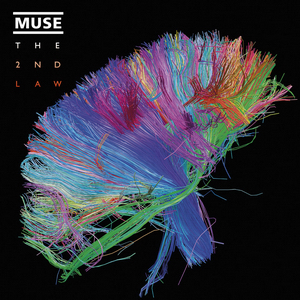
You feel the band should have held back on naming the album The 2nd Law, since there is almost no mention of it on the album bar the final two songs, dutifully titled The 2nd Law: Unsustainable and The 2nd Law: Isolated System. This is the second law of thermodynamics the band discussed extensively pre-release, relating to energy in the universe inexorably lowering in the face of the exponential growth of industry and over-population. Cheery stuff, but apocalypse is nothing new for this particular band. Unsustainable is the track that caused no small furore when it was released as an album trailer online in June, due to the fact the song is the band’s own slice of dubstep, performed on instruments as opposed to computer productions. The style actually fits surprisingly well into the bands frantic aesthetic though, and it is ultimately proves to be a risk that pays off. The final track Isolated System is a quiet, piano led track, with some very slight electronic throbbing to serve as a beat, along with some miss-matched recordings from News snippets reporting various titbits of grim news. You feel like it would have been better as an opener; it creates intrigue that leads to nothing. But it is still a satisfying conclusion, and shows the bands ability to off-set their bang-and-clatter with some thoughtful moments of quiet reflection.
The 2nd Law is not “something radically different”. The biggest criticism levied at Muse is that their recent work has been unadventurous. This is not meant in the ordinary sense, since the closest Muse ever get to being ‘unadventurous’ is by releasing a fifteen minute long symphony called Exogenesis. But you have to remember that the over the top bravado rock of which Muse are best known for, was itself an innovation. When the band released their first effort, it was a long, long way from high concept stuff like thermodynamics. Muse can be said to have roughly three different stages thus far; their first three albums serving as a starting point, before moving into Muse Mk 2 with Black Holes and Revelations. They are still in that second stage, but one feels that, with 2nd Law, they have got all they can out of their current arrangement. Asking them to move on just yet would be killing the goose that lays the golden prog eggs. One thing you note about Muses's recent work is that it is dizzyingly eclectic, after showing a staunch commitment to theme on Absolution and Origin of Symetrey. This is to be admired. Though their restless riffling of musical directions can be frustrating, since a commitent to any of the directions taken on this album would make for compelling work on its own. Next time round, expect something “radically different”. But it’s rude looking at the Argos catalogue on Christmas day. This is still a satisfying, interesting and highly inventive sixth effort. Up next: Muse Mk 3.

No comments:
Post a Comment