12. Black Rebel Motorcycle Club- Specter at the Feast (Co-Op)
 The Motorcycle Club have failed to release a truly great
album since their debut back in 2003, with a string of good albums and a few
forgettable ones in between then and now. On the back of personal loss, and re-assement
of their direction and sound, the L.A. gloom-rockers have released their most
personal and inventive record to date.
Their long time sound-engineer Michael Been
died last year, and this has engendered a revival of sorts of in the band on
the back of some of their more jaded material, and Specter at the Feast is a fresh, impressive set. The album begins with dreamy intro, sounding not
dissimilar from the opening of U2’s The
Joshua Tree, ethereal synths and all, but this floaty quality is brought
back to earth by a clunking, punk-rock bassline and a weary narration from frontman Peter Hayes in Fire Walker. There is more
familiar material on offer, but even still, their hard rock moments pack a
greater punch than ever before, particularly on the cover of Been’s own track; Let The Day Begin serves as a crunching,
ballsy, and yet strangely heartfelt salute to their old friend. B.R.M.C sound refreshed, and almost come out
of this a new band. They are hamstrung by a few duffers in the middle set, but
their more experimental tracks (see the soft Sometimes the Light) fits snugly amongst their heavier material.
Then there are the vocals, and B.M.R.C show an expanded
range and a new approach to narrative. Peter Hayes’ distinctive snarl isn’t a
particularly effective vehicle for positivity, but Lullaby is almost hymn-like, in its simple, heartfelt sweetness.
Even when snarling is afoot, Hayes pushes it to all new levels of venom on the
furious thrashing of Teenage Disease,
with its genius hook (‘I’m a common cold/
You want it/ Come and get it’).
B.R.M.C. have produced something in equal parts suprising,
impressive, and unexpected. I had rather expected B.R.M.C. to fade into the
foreground, but they now return, apparently aware of their fading appeal,
re-energised and fighting for their place amongst the best of current hard rock
bands. When it provides as interesting results as these, I’m all too happy to
give them a shot.
Download: Let The Day Begin
11. Willy Moon- Here's Willy Moon (Island)
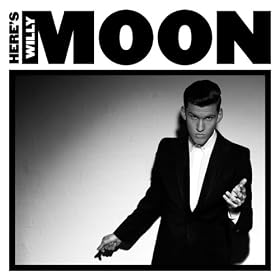
As the first in a double act of new and innovative indie pop, self-styled 50’s throw-back Willy Moon released his first LP Here’s Willy Moon. I had waited a fairly long time for this new effort, having caught Moon’s YouTube videos over the summer. It was certainly a long wait, although Moon did experience some success leading up to the release. Yeah Yeah teased the charts for a bit after it was used to promote the new Ipod and also Waterloo Road, at which point all the tards who watch it presumably quite liked it. Moon’s promise of 50’s rockability melded with modern day production values isn’t necessarily anything new, with all sorts of artists taking inspiration from the blues and roots movements of the time. Still things kick off pretty well on the anthemic Get Up, with some lovely strings and a wry nod to A Boy Named Sue.
Yeah Yeah is still a fairly exciting piece of work, melding obscure vocal snippets with a hip-hop back beat. But the problems prevalent in that track are a microcosm of this album as a whole; for the most part it is punishingly simple. Besides Moon’s own wailing and hollering, there is little else to give the tracks a sense of groove.
Some songs introduce enough new textures to warrant their
place in the listing, Railroad Track
is a weirdo-groove with chiming bell-towers and weird backing vocals, where
Gregorian chanting and barbershop quartets meet in the middle for tea and biscuits. The Ritchie
Valens guitar work on I Wanna Be Your Man
is a nice touch as well, but the track doesn’t even make it past the two
minute mark, and as a result it fails to build up any traction and feels like a
snippet from something far longer, and better.
This album has hardly been produced at all, intentionally, I
think, to try and replicate the simplistic styles of classic Rock n’ Roll 45’s.
While that commitment to theme might be admirable, it all sounds bloody awful;
everything is so scratchy that it sometimes sounds like someone scraping a set
of keys back and forth over a cow bell. Moon’s vocal performances are largely
quite effective but even still all the guttural screeches get old quickly, and
too often he imitates his inspirations, as opposed to actually channelling
them.
Little Richard succeeded because he was a fantastic pianist,
and was able to create satisfying grooves even if his songs were simplistic and
rarely exceeded two and a half minutes. Only one song on this album makes it
past the three minute mark, and while the pre-release material assured us Willy
wouldn’t ‘waste any time’, actually the brevity of these songs proves to be a
real problem. The tracks end so quickly that few of them pick up any steam and
nearly all fail to build a memorable rhythm. A further problem is that while
they are brief, they hardly do anything to grab your attention either. Indeed
some of these songs are actually bad; Willy’s vocal crackling in Working For The Company is just a racket,
and the Little Willie John cover of I Put
A Spell On You is equally disposable.
The willingness to break the mould and try something new is still rather gallant of Willy, and some of the songs capture the energy and humour of the 50’s perfectly. But all too often the album falls flat due to a refusal to advance beyond a simple backbeat, and a very short running time that sees the whole album play out in under a half hour; it’s less like Here’s Willy Moon and more like Where’s Willy Moon.
Download: I Wanna Be Your Man
10. Woodkid- The Golden Age (Green United Music)

Sometimes, but not often, you hear an album that is almost totally beyond compare. While not always a good thing, that is usually a sign that innovation is afoot, and it’s also the way I would describe Woodkid’s debut, The Golden Age.
If I had to describe it, and I probably do, I would say it
is what Moby’s ambient classic Play
would have sounded like if it was recorded atop the Notré Dame belltower circa
1866. Bell chimes, flutes, horns, chellos, and more strings than a harp being
played on a suspension bridge, combine to make The Golden Age is an elaborate, romantic, and multi-instrumental
affair. The thing that makes this distinctly Woodkid is the vocals of the man
himself, a.k.a. Yoann Lemoine, whose husky French narration adds to the exotic
splendour. The eponymous album opener begins with a sort menacing grandeur, as
grand, ornate piano plays over the stomp of sudden drums and inciting trumpet
fanfare; it’s a fantastically bold song, echoing with a sort of faded grandeur
that recurs through the entire album. Run
Boy Run stirs up a terrible ruckus too, with a thumping drum beat, and a
crackling, frantic energy. It’s probably a representation of just how good The Golden Age can be, and the way it
transcends towards the climax, with the hopeful narrative of escape, and some
of the most gorgeously transposed strings, is nothing short of breath taking,
culminating in a sort of gothic rave.
Similar success is found in the clanking Iron, with its apocalyptic, doom-laden
war march, and the oddball Conquest of
Spaces, with its slide-whistle violin effects, sounding like something from
H.G. Wells’ War of the Worlds.
It’s where Woodkid strays from this path that this album
falls down. Too often The Golden Age
slides into straightforward piano dirges, like Boat Song and The Shore,
and even some of the noisier stuff doesn’t quite work out; The Great Escape sounds a bit like an elaborate re-telling of the
Benny Hill theme tune, and Stabat Master
blusters rather too much, with its Grecian slave-chanting and portentous
wartime narrative. I was looking forward to Woodkid’s debut for some time, and
considering some of the material on the EPs, is better than on the album
itself, I’m left a little put out. Tracks like Baltimore’s Fireflies and the sweet acoustic ballad Brooklyn were unique, poetic, and
sonically more diverse than some of the material on The Golden Age, which seems rather absurd.
I supose you must respect Lemoine’s decision to present as much original material as possible, the album would have been immeasurably stronger if some of the Iron EP had been included. Though, that’s not to say Woodkid cant invoke subtlety; the chiming, charming pop track I Love You is a moment of bittersweet relief, and Where I Live is a gorgeous little gem full of remorse and regret. It sounds rather like Sting’s Mercury Rising; and similarly Lemoine succeeds in telling tales from diverse narrators, who often share nothing in common with the writer himself. Such empathy is rare indeed.
I first heard of Woodkid after Iron was used in one of the Assassin’s
Creed trailers, and this serves as a good indication of how quickly gamers will
grow fond of song and how little they will be inclined to actually support it.
Whilst the video for Iron has
accumulated over 30,000,000 views on YouTube, The Golden Age charted at a paltry No.38 in the Album Charts. That’s torrenting for you. Still this album is
one of the most interesting and challenging albums to be released this year,
and on its pure artistic merits it is probably the most meticulously arranged,
with an impressive demonstration of instrumental craft on the part of Lemoine. On The
Golden Age,he succeeds in creating sweeping, vivid soundscapes, all held
together by the narrative thread of childhood and youth; for that, to him, is
‘The Golden Age’. It’s not perfect, no, and it’s probably a bit gloomy for
some, but taken for what it is, this is a passionate, sincere and powerful piece
of art.
Download: Run Boy Run
9. Hurts- Exile (Major Label)
 In a little piece of symmetry that makes me feel old indeed,
Hurts released their debut in the last breaths of summer 2010, whilst I
prepared my naive young self for three years at university. Now, as I stand
teetering on the abyss of graduation, Hurts have released their long-awaited
follow up, Exile. Synth-happy debut Happiness was and is one of my very
favourite pop debuts of the past few years, combining all the overwrought
emotion of 80s-cheese and combining it with top-notch production values and Theo
Hutchcroft’s own highly effective croon. Oh, and a duet with Kylie
Minogue. They say you should know your
audience; if that won’t get the gays on side then I don’t know what will.
So, after Happiness
proved to be the slow-burner of 2011, what do the lads offer us on this
sophomore effort? As a starting point, electric guitars. This is hardly
surprising, since some of the most effective moments on Happiness came from well-placed guitar breakdowns; see Wonderful Life or the brilliantly
melodramatic Evelyn (“Stay with me Evelyn/ Don’t leave me with the
medicine”; the rousing tale of one very unappreciative hypoglycaemic). The added grit really builds on the sound of Exile, and brings a whole new range of
influences into the band’s sound. Take The
Road, a track which was released pre-emptivley by the band on Youtube. On
its own the song didn’t really grab me, in fact it made we wonder if Hurts had
lost any conception of what a ‘hook’ actually was.
That struck me as strange,
since Happiness was so crammed full
of them it closely resembled the local reel and tackle shop. But snuggled cosily in the framing of an EP it
really comes into its own. The Road
is informed as much by Cormac McCarthy as it is by Trent Reznor, and it makes
for fairly compulsive listening. There’s chugging guitars, vocal distortion,
and deep, quivering synths that arrive about as inconspicuously as Pope
Benedict nipping in to use the loos at G-A-Y.
Hutchcroft confessed to reading McCarthy’s dark masterpiece of the same name
three times whilst the album was produced, and more than anywhere else, it
really shows here, with the track deftly referencing some of the novels
narrative threads. This new found love of the six-string works equally well on Cupid, and the lead single, Miracle.
But it is here that we see the only real problem with Exile; that, in stark contrast to their
catchy debut, no single track stands out as single material. Miracle probably comes closest, and yet
it possesses none of the kick of tracks like Wonderful Life or Better Than
Love which made their debut such an accomplished piece of work. Is this a bad thing? In one way it certainly
is, because catchy songs tend to be the way to win new fans on PM radio.
However on the other hand, the bands’ abandonment of the radio-friendly can be
welcomed, as it shows a band willing to put creativity and individuality above
what a lot of people might want to hear; a deeper commitment to music as an art
as opposed to a commodity. And speaking of art, this album, on any view, is
surely an inspired and organic progression from its predecessor.
Sandman
suggests The Pet Shop Boys shot through Wu Tang hip-hop, which makes it one of
the most visceral and accomplished songs the band have produced; a marriage of
weird vocal effects and far-off whistling with a very proper hip-hop
backbeat. Hurts approach lyrics with a
willingness to delve into the ridiculous, and indeed many of these tracks coast
along on lyrics that can be nigh on hilarious, particularly on Miracle, which sees a series of tried
metaphors get strung alongside one another like a line of baggy Y-fronts on a
tatty old washing line. But Hurts also succeed in creating some songs that are
genuinely lovely, and more than that, actually rather relatable. Take the
sweet, euro-pop ditty of Only You,
which bubbles with a somewhat unexpected warmth, far away from the boys
previous tales of larking about in the pouring rain (Stay) or angrily gesticulating at bathers at the local leisure pool
(The Water).
That said, it would be hard to call this an
understated album, and it is hard to get through any one song without a sudden
burst of strings or a heartfelt chorus sweeping over everything. Somebody To Die For begins as light as
the starting murmurs of a morning alarm-tone, but it soon builds into a soaring
pop track that echoes of U2. The problem is that as a streamlined pop act Hurts
lack the kind of muscle to really rival a band like U2, and such forays wind up
feeling a bit anaemic. That’s not to say the band can’t do bombast of course; The Rope channels the legacy of Mike
Oldfield and the quieter work of Deadmau5 in equal measure, and Mercy sounds like what the Second World
War would have been like if it were won by an army of broom-toting Nuns in leather
singlets. That said, the album closer Help manages to hold back a little and
it’s all the better for it. It also features Sir Elton John on the piano, which
continues the bands current tally of having at least one gay icon per LP.
Exile is a
success; it sees the band go and wedge their mucky fingers in a bunch of new
pies and it all works rather well. Their Achilles heel is perhaps their tendency
to slip into melodrama; although, you could say that this is no bad thing in
today’s climate of tediously straight-face pop, and indeed, it may be the thing
that truly defines Hurts. Either way, it would seem that for this very talented
act, the only virtue that slips their grasp is subtlety.
Download: Only You
8. Bonobo-The North Borders (Ninja Tune)

The retreat of trip hop from the music scene from the early
noughties onwards is a constant source of woe for me. Trip was like hip-hop's
more jaded, grown up cousin. Often dark, convoluted, and thoughtful, some have
carried on this cosy little niche in the form of glitch and down tempo music.
This is where Bonobo comes in. Black
Sands is his magnum opus; an accomplished slice of chill-out, in-set by
solid grooves and glitch backbeats. He returns this year with The North Borders.
That isn’t to say its a dirge; Bonobo (real name Simon
Green), like counterparts Four Tet, succeeds in producing music that is at once
heavy and yet deft, often even dancey. Kiara,
with its soaring violin intro proved a good example of this on Black Sands, and on The North Borders he produces possibly his most appealing track
yet; the mystical weird-out Cirrus,
sounding like a brotherhood of monks doing meth atop a belltower. Occasionally,
Green does overstep the mark and some songs lack the soulfulness that prevents
the whole album sounding cold and distant; and Heaven for the Sinner is
little more than stoner fodder.
However, more often than not Green succeeds in making introverted,
sometimes chilly, but ultimately satisfying beat-driven RnB.
Electronica
is often derided as being spacey and calculating, ultimately
divorced from warmth and a ‘human touch’; I remember when Eminem blasted
Moby
on the basis that his music induced fucked up trips. Thats a
particularly
idiotic example from a particularly idiotic rapper, but it mirrors a
preconception
that persists even in this day and age where synthpop is big business.
Bonobo reminds us that without pounding bass, infectious hooks or a TV
personality, it is possible to make music that is actually more
powerful, and
more personal, than music from bands that incorporate all three. Is
Simon Green
ever going to have a number one with his brand of early-hours space out ?
Sadly, probably not, though few DJs are operating in the UK with this
level of
instrumentalism and panaché. A solid build on Black Sands, North Borders
provides songs for restless nights and quiet ablution.
Download: Ten Tigers
7. Pure Love-Anthems (Vertigo/Mercury)
 Rock needs an angle these days. Alt-rock, indie-rock,
dance-rock, pop-rock; apparently you can’t make it in the genre without a bit
of help. So it is refreshing that Pure Love have burst onto the scene with an
album that goes straight down the middle of the road, giving us Anthems, a suitably titled classic rock
debut. I was never a fan of the crushing melodrama of Gallows, but frontman
Frank Carter has transposed all the power of his previous band and thrust it
into a far more satisfying direction. Carter’s
impassioned cockney twang infuses with indecently chunky guitar riffs and manic,
precise drumming to create a highly satisfying and in places rather surprising
body of work.
The bands greatest strengths probably lie in its more
frantic moments. Opener She sets the template for the album to come; combining a huge guitar riff with
Carter’s wry, nihilistic narration of
disillusionment and soured romance along with an infatuation with the kick
drum. Stylistically it isn’t a huge departure from Carter’s previous work, but
that is before the album starts to actually have
a good time, something that, taking one look at pasty tattoo-plastered
Frank Carter, seems hugely unlikely. And yet Bury My Bones and Beach of
Diamonds are just that; big, satisfying and sharply optimistic rock anthems
designed for summer drives and student parties. That certainly is a departure.
If you disallowed fornication as subject-matter for rock and
roll, then you would probably have to right off half the genre. Pure Love are
happy to carry on the motif, with the wry Handsome
Devils Club as well as Burning Love,
with it’s crushingly inevitable descriptions of angry fornication (“Pull me close while I bite your
neck...leaving teeth marks in your flesh”).
The boys do go on about fannys an awful lot, and by the end of Anthems I was unsure if the band were
fuck-happy twenty-somethings or just overworked gynaecologists.
That said Anthems would have been worth it enough for Carter’s songwriting and Jim Caroll’s surging, engaging guitar work (Scared to Death, March of the Pligrims), but I realised by the end of the album that my expectations of big, crunching, and ultimately unsympathetic rock music, had been exceeded. It took me totally by surprise when the folk-y Heavy Kind of Chain moved into some evocative and lovingly arranged Celtic violin, or when the low-down Anthem enticed some silky, bluesy piano into the fore. Pure Love demonstrate an ability to really nail their rock and roll centrepiece, but it is their willingness to diversify that makes Anthems stand out as a truly excellent debut.
Download: Bury My Bones
6. The Neighbourhood-I Love You. (Columbia)
 Tumblr is the place where white, first world kids in their
teens and early twenties go to mope about, posting GIFs of cats, porny shots of
preppy young men and greyscale pictures of bridges and skylines with some
drippy ‘Love is Eternal’ bullshitty message superimposed over the top. Generally I don’t consider it to be a hotbed
of creative talent and avoid it wherever possible; mostly because I know one
day it will be considered an indictment of the apathy and insularity of our
current times. However it has birthed us
something of worth at last, with L.A mood-rockers The Neighbourhood releasing
their debut album I Love You off the
back of popularity on the blogosphere.
Tumblr has certainly left its mark on this album; quite
literally, since the album cover, focusing on a sepia tone dust cloud, would
sit rather well on any self-respecting tumblr dashboard. But more than that,
the aforementioned futility and angst has unfortunately carried over as well.
The area where this album falls down is in its lyrics and narrative; since most
of it could have been ripped from the internal monologue of Charles Manson
going through his awkward tween phase. Lines like ‘Chewed me up/Spit me out/Pissed on me’ bring back shuddering
memories of Linkin Park’s Meteora,
emo bullshit and all, and it’s all rather a shame, because elsewhere, this
album really shines.
Well, maybe not shine. This band don’t exactly invoke light
very often, and presumably recorded the whole work in a dark room whilst
scowling and tutting every time the drummer got up to make a brew. But I Love You positively drips with
atmosphere, creating a rich, vivid soundscape to explore interesting, if
rudimentary rhythms and styles. Album opener How draws you in slowly with creeping electronics that lead into an
industrial drum-stomp, and further quality abounds in Afraid, which proves an album highlight. An effective indie-hop
drumbeat cracks over a simple but spot-on chorus ‘When I wake up/ I’m afraid/ Somebody else is gonna take my place.’
I may moan about the lyrics on the album, and so I bloody
should (another gem; ‘I don’t like you/You
suck anyway/ You make me wanna scream’.) However, the style is absolutely
spot on, with main man James Rutherford giving a youthful but husky narration
to each track. His real success is in his ability to phase his vocals with the
song, and his singing charts the peaks and lows of the beat to produce an
organic, groove-enthused effect. Rutherford has clearly attempted writing the
lyrics alone (as confirmed by the sleeve notes), and that is to be admired;
though next time round, a group effort might help to produce a more interesting
narration. Still, as a narrator, Rutherford really impresses.
This blend of character and mechanistic instrumentality comes together at its most fruitful in the bands stylish centrepiece, Sweater Weather. All breathy vocals and hushed guitar, Sweater Weather is an impressive, moody track, and Rutherford displays that he is capable of writing a memorable narrative, when he sets his mind to it. The bands emphasis on lust and longing rings notably of Maroon 5, and in many ways Rutherford sounds rather like a gothic, angsty version of Adam Levine; considering Levines talent, that is a good thing indeed.
The first half of the album is undoubtedly stronger than the
second, but Female Robbery and Little Death do end the set in some style,
and certainly leaves us wanting more from The Neighbourhood. There is a lot of
potential in this band, and their echoed production values and emphasis on
atmosphere is welcomed by any fans of Lana Del Rey’s sorrowful croon, or even
of the staccato, one chord brilliance of The xx. What is needed is a more
mature approach to songcraft, and more than that, a sense of urgency, with much
of I Love You feeling rather
lethargic. Though, perhaps to an extent that is the point. Regardless, this is
an impressive and enjoyable first effort; where the band go from here could
prove interesting.
Download: Sweater Weather
5. Ludovico Einaudi- In A Time Lapse (Decca)

The passing of time has seen two things for veteran composer
Ludovico Einaudi; suprising, internet-fuelled international success, and an
increasing fascination with the sound of the future. Both of these are built
upon in his latest album, A Time Lapse.
In 2009’s Nightbook,
Einaudi began to experiment with synthesisers and various sonic oddities but
this bleeds through totally into Time
Lapse, making for his most interesting album yet. Opener Corale has the sort of sweeping strings
we have come to expect from Einaudi but the real kicker comes in the self
titled Time Lapse, complete with
futuristic synth murmurs and groans, alongside some classical guitar and
driving piano. Life is built almost totally around a little a light cymbal tap;
its a strangely whimsical track that stands somewhat at odds with Einaudi’s
more earnest material. But it demonstrates
real departure for the great Italian, and that is essentially what A Time Lapse is. Moreso than on any
other album, Time Lapse is incredibly
atmospheric, and the central theme throughout the album is, fittingly,
intrigue. It is Einaudi’s most probative effort, with a grand musical scope and
a richness lacking on some of his earlier material, namely the Melodia Africana. His piano-playing is
still a thing of beauty, melodic and poignant at the same time, he is
undoubtedly one of the greatest symphonic composers of the twenty first
century. Though Run and Brother do little to develop these
interesting themes, Newton’s Cradle
is Einaudi at his inventive zenith, and Underwood
makes for a powerful conclusion.
It is difficult to properly critique classical music because
it operates at such a higher level than popular music, but it is still just as
easy to know when something is very, very good. I never pretend to know
anything about the genre, but Einaudi’s style proves irresistibly fresh, and proves
that classical music can still have a profound, and edifying effect . A Time Lapse proves the perfect drop off
into Einaudi’s work, and while it may take some time to sink in, his sweeping,
grand music is some of the loveliest, most personal, and most effecting. A
classical composer for the Ipad age.
Download: A Time Lapse
4. Kavinsky-Outrun (Vertigo/Mercury)
 I can’t drive a car, I never even took my theory. But
something happened recently that made me want to drive, I saw Drive. Drive made me want to drive. Drive
really drove me to drive. Drive.
Any man who claims they don’t want to cruise around L.A by
night, chewing a toothpick and ferrying various ruffians about with a cool
off-hand precision, whilst letting go the occasional gruff one-liner, is quite
simply a massive fucking liar. And one man that understands this more than most
is froggy House producer, Vincent Belorgey. His debut album, Outrun, came out earlier this year and
it is probably one of the freshest electro albums of the past decade. Alter-egos are rapidly becoming the current fad in pop
music, with many singers using them in a last ditch effort to seem less
retarded. Take Nicki Minaj, who has an alter ego called Roman. You can tell
when Roman is singing because her voice gets all fucked up. Good luck spotting
that transition. I was about to give a haughty sniff when I learned that Belorgey
was using an alter ego as well but then I read a little about his alter-ego,
Kavinsky. Wikipedia describes it thusly;
“Outrun has a running theme which refers to Kavinsky’s backstory of a man who crashes his Ferrari Testarossa resulting in him becoming a zombie who produces electronic music.”
That, I believe, is how to fashion an alter-ego.
What transpires is a pulsing, fiendishly silly album dedicated
to a long drive in the car; sometimes it trots at a cruise, other times it goes
full out, but the perpetual motion of four wheels on tarmac remains throughout;
it’s the perfect driving album. This is an album as influenced as much by cutting edge French House music
as it is 8-bit video game soundtracks, and the two merge into a dark and
fantastic whole on Outrun. Prelude kicks things off with an intro
that channels all the play-macabre of the Thriller
narrator through some icy synth murmurs and some thunderbolt keyboard drops,
sounding like what would happen if you got George A. Romero to produce an
episode of Miami Vice. This 80’s
weirdness is continued into Odd Look,
which features some squeaky robot rapping and 8-Bit production values. But
things only go totally arcade when Testarossa
Autodrive starts up, sounding like a police chase being fed through Contra, with pulsating cheese-synths like half of the NYPD having a mad one at a roller disco. This is
backed up by Kavinsky’s calling card, the slinky, irresistible Nightcall , of Ryan Gosling staring into
the middle distance fame. It is by far the best thing on the album, with some
laser gun keyboard touches and Lovefoxxx from CSS crooning softly like Blade Runner’s saddest replicant.
It
fits surprisingly well into the narrative of Outrun, which is sort of surprising since it fit equally well in Drive, a movie curiously short of
teenage zombie disk jockeys. Still the reason is fairly obvious; stick any
speeding car alongside Kavinsky’s music and it would fit like a couple of happy
duplo blocks. Like I said, this is music for cars, about cars, and as a result
it can sound a bit tinny if you pop it on whilst reclining at home or dredging
the pool or something. I found myself being quite impatient with this album at
times when I was just sat still because it only ever moves at one speed.
Although that is not the only problem here; some of the songs are simply too
repetitive. Take Blizzard, where
scratchy guitars and vocal echoes kept me fairly glued until about the 18th
loop, at which point I passed over to Protovision
which delves in similarly circular directions; some of these songs really do
test your willingness to use the skip button.
However these shortcomings are ultimately forgotten beneath
the zany brilliance of Grand Canyon,
a climactic track that throbs and warbles across an off-kilter drum beat, the
build up to the final battle which comes in Roadgame,
which features strings and heavy piano thudding, expertly transposed into the
song so they retain the quality of sounding about thirty years old and all the
better for it. The ending piece, the flipside of Prelude cruises along similar narrative pomp, although it doesn’t
quite match that brilliant opening; it relies on the phrase “some say” rather too much. This is by no means a perfect album, nor is
it an all round dance-pop blaster like Justice’s emphatic debut. What it is, is
a highly polished and deeply satisfying SNES trip that cruises along best when it’s
blasted on a night drive. What really makes this album stand out is its sheer
inventiveness. Kavinsky may not have the chops to face off House heavyweights
like Daft Punk but he has something that a lot of dance music lacks, and that
is heart. Outrun is an album that
laughs at its own jokes and you love it all the more for it, it knows full well
how contrived and bizarre it all is and it is this endearing self-assurance
that makes this album such a satisfying piece of work.
Download: Grand Canyon
3. Imagine Dragons- Night Visions (Interscope)
 Another band brought to the fore by an Assassin’s Creed gameplay preview; Ubisoft certainly know a tune
when they hear one. Thankfully Las Vegas new boys Imagine Dragons have experienced
rather more success than their French compatriot, and its well earned; debut Night Visions is a blockbuster in every
sense of the word. Apart from the literal meaning, obviously. I mean what do blocks
have to do with anything in the first place.
Singing with all the gruff Heartland soul of The Black Keys’
Dan Auerbach, with a little more radio-friendly gloss, main man Dan Reynolds
provides a convincing and exciting orator.
Reynolds embodies the underdog (perhaps an unrealistically sexy
underdog; think DiCaprio’s attempts to play an Irish street waif in Titanic), and the persistent theme on Night Visions is of trying to make it,
and vying for a breakthrough. It’s actually rare for a debut to focus so
personally on the toil and tribulation actually going in to making that same
album, but it really works; everyone at some time has felt the thrill and dread
of going up against the great unknown. We feel their frustration as obstacles
impede them; Tiptoe (‘Take some time to/ Simmer down with your
head down low’) and Demons (‘When your dreams all fail...and the blood’s
run stale’). Yet we feel their relief, and reaffirmed belief in It’s Time (I’m just the same as I was/ Now don’t you understand/ That I’m never
changing who I am’) and Amsterdam
(‘Your time will come/ If you wait for
it’). For such a youngCha Ching) and
working a shitty job just to get on a higher rung (Nothing Left To Say). I found myself feeling a real resonance in
this album which is so rare, and they really nail the pains of growing up and
also the ugliness that lies below the veneer of life in the First World West.
This is a sensible album, which may sound strange, but it
never becomes ludicrous, the subject matter is firmly grounded in reality and
since the songs themselves are sonically quite adventurous, it’s an arrangement
that works rather well. There isn’t much
room for subtlety here, and the band approach every song like it’s an anthem;
no bad thing, but it generally means that every song has a sing-a-long ready
chorus, ripe for PM radio. The Dragons are interesting in that even though this
is big pop music akin to Coldplay and
The Killers, they retain at least
some of their indie credentials, and there is still a fair amount of intense
indie weirdness at play here too (Radioactive
and Bleeding Out).
Night Visions is an unorthodox album, sonically if not conceptually. The band display an impressive ability to mix things up, with
some inspired choices like the combination of acoustic guitar with dubtep wubs
in Radioactive, or the mandolin hook
in It’s Time. Then there’s Rocks, the second part of Nothing Left To Say, which is a frantic
banjo trip with tribal drums and weird forest-call lingo. They don’t always get
it right; Underdog sounds like
Passion Pit on a rainy Wednesday night, and On
Top Of The World is actually rather annoying and plinkity-plonk, sounding
like what you’d get if Baz Luhrman directed the Lord of the Rings trilogy. Still Night Visions is an evocative and memorable album, and definitely
one of the strongest this year. In essence, this is this decades Hot Fuss; an inventive and popular indie
debut, set to shake things up for some time to come. Unfortunately though, the
radio has ensured Radioactive has
outstayed its welcome just as drastically as The Killers’ own Mr Brightside.
Download: It's Time
2. Atlas Genius-When It Was Now (Warner)
 Adelaide, Australia. Not exactly renowned the world over as
a centre for musical excellence and innovation; in fact I think most locals
deem it an achievement if they can cross the street without being shanked like
a spry calamari ring. And yet it is from that queer little town that we have one
of the most interesting acts of recent times, Atlas Genius, who, after a
promising EP, have finally released their debut album, When It Was Now. Capturing the inventiveness of The Police as well
as the deft guitar work of indie acts like Death Cab for Cutie and Modest
Mouse, When It Was Now is an oddball
debut crammed with summer jams and dreamy aussie optimism.
This is an album that propels along on clever guitar
inter-play, groovy bass lines, some original and kooky synth work, and solid
pop song writing. There is a fairly infectious dose of positivity that comes
from a full listen of this album, and thankfully they don’t try and mix it up
by shoe horning in any more sombre material; these boys know when they are onto
something good. If So captures the very heart of the band’s sound, combining delicate
guitar riffs with cymbal tapping and sun-dappled synths, alongside a highly
polished sing-a-long chorus. This is followed by Back Seat, which by contrast is a rather contrived track, with an
off-kilter drum beat and an experimental edge. The lyrics detail a couple
fumbling about in the back seat of a car, which isn’t exactly certified fresh
as far as adult contemporary radio is concerned. It’s a weird track and it
takes a few listens for it to sit properly, but when it does, Back Seat has probably one of the
loveliest choruses of any of the songs on the album.
Atlas Genius have furnished for themselves a rather nice
little nook in the current indie climate; harnessing all the kitschy guitar
play of Franz Ferdinand as well as the dance-pop sentimentalities of Two Door
Cinema Club. Through The Glass is big
and breezy, with some regretful lyrics and acoustic guitar, that channels
Coldplay’s Yellow as well as the
aesthetic of stable mates Imagine Dragons. It’s a nice little foray into the
arms of stadium rock that stops the album becoming too narrow and proves that Atlas
have the chops to fill an arena just as efficiently as their more established
counterparts. This flows into the snoozy summertime pop ruckus of On A Day Like This which echoes Tears
For Fears circa Pale Shelter and
Maroon 5’s triumphant debut Songs About
Jane , a tone continued into the chilled out Centred On You. Regrettably
there is still some filler at play on this promising debut; Don’t Make A Scene doesn’t leave much of
an impression, and All These Girls fails
to advance beyond a catchy chorus. But Atlas work best when they combine sunny
synths and upbeat vocals with a shimmering, summertime guitar hook; a setup
that works fantastically on the title track, and the final track, Symptoms, which bustles along on an
infectious acoustic component, Beach Boys guitar work and a punchy
backbeat.
When It Was Now is
quite simply the best thing to happen to indie rock in years, and it demonstrates
a welcome buck to the trend in indie music that being mopey automatically makes
you edgy. Some initial reviews have been quick to label When It Was Now as big and dumb, which seems to me rather harsh.
Listen to this on a sunny day and you will get totally wrapped up in the
emphatic guitar licks, the pretty keyboards and front man Keith Jeffery’s
smooth vocal contributions, sounding like a born-again Neil Finn. This album
may have been produced in self-made studios around the globe, but there is a
definite aussie freshness to Atlas’ brand of indie rock; and there is more than
a whisper of the riotous House music circulating Australasia at the moment, of
bands like Miami Horror and The Naked & Famous. When It
Was Now is a nifty and impressive piece of indie that harnesses the
twitch-rock of bands like We Are Scientists and shimmering synth-pop, all
coasting along on the irrepressible spirit of New Wave.
Download: If So
1. Daft Punk-Random Access Memories (Columbia)
 Daft Punk are in the enviable position of being that band
that everybody inherently likes and at the same time the band that everyone’s
mum seems to mispronounce (last week my mother spoke to me straight-faced about
the recent Number One smash from Silly Punks.) Whilst Daft Punk made EDM with
their all conquering Discovery in
2001, the genre they return to in 2013 is much diminished. Dance music has
officially ran itself ragged, reverting to a state of such base, simplistic
cheapness, that little respect for the genre remains. Chart mainstays like
Calvin Harris and David Guetta produce music that is totally bereft of style,
taste, and most importantly, a sense of humour. The frenchies return with their
long awaited Random Access Memories,
but it’s been a long, long wait.
Still, the disdain we feel towards current dance music is
met with resonance in opening track, the appropriately named Give Life Back To Music. To an extent Random Access Memories is a protest
album, though one that achieves its aims by being impossibly suave. Random Access is an incredibly stylish,
gorgeously produced album, and the use of vocoders is some of the most
impressive ever recorded . Since Daft Punk are ‘The Robots’, vocoders are
actually used to give mechanical voices a human quality, in reverse to the
traditional use of a vocoder. The over-attenuated French accent, sweetly
bleeping and smoothly phasing through the stylised distortion in The Game of Love and Within, is nothing short of gorgeous.
Daft Punk have flirted with funk before; their bleepy mega-hit Around the World made an overt reference
to disco titans Chic, but here it really comes to the fore. The recruitment of legendary
guitarist Nile Rogers and an out of practice Pharrel Williams proves a match
made in heaven. Rogers’ rhythmic, funky guitar lines combined with a
particularly pitch perfect contribution
from Williams come together to produce some of the best material on the album;
the slow-burner Lose Yourself To Dance
and the euphoric summer smash, Get Lucky.
Get Lucky is the best thing on the
album, unsurprising given that it is probably one of the most accomplished pop
songs to be released in the past five years, and indeed it sounds even better
in its extended album format.
I do have my quibbles with Random Access. Disappointment is definitely not the right word;
this is an intelligent, deft set of songs, and it’s a real pleasure to allow it
to run from beginning to end. I suppose I expected something different; what I
really wanted was an album that would reignite dance music and remind everyone
else that music can be fun without being dumb. As I said, a protest album, of
sorts. But that isn’t what Random Access is;
this album reminds me rather of Ridley Scott’s disputed classic of recent
times, Prometheus. Like that film,
many people will surely have concrete expectations of this album, and like
Ridley Scott, Daft Punk have quite understandably veered from any single
purpose and explored a plethora of different themes at once. Granted Random Access is still fairly cohesive,
and the aesthetic of 70s disco and soul is respectfully and emphatically
explored through much of the album. But when the ‘bots veer from this
trajectory, no matter how impressive the results, you can’t help but feel it’s
a shame. The chorus on the Julian
Casablancas collaboration Instant Crush
is almost indecently pretty but taken in its indie trappings, it sits obtusely
alongside the sleek funk ensemble. Similarly, there is no denying that this
album delves rather substantially into The Cheese. Of course it’s the sleekest,
most rarefied cheese you’ll ever hear, but sometimes you can’t quite suppress a
grin at the elegant silliness of tracks like Fragments of Time.
Then there is Doin’ It
Right ; the only track on this album I actively dislike. The truth is that
when DP stray into more experimental territories, no matter how impressive the
results (see the epic tempo-shifting Touch,
or the sci-fi Motherboard), they lose
focus, and such songs sound like remnants from the sparse Human After All, with its more electronic aesthetic. Random Access isn’t really a dance album. I refuse to believe that anyone could whack
this on at a party, although I certainly would respect them for it. It’s just
that considering the third track begins with an extended monologue by krautrock
synthesiser-pioneer Giovanni Giorgio, who sounds rather like Claus the goldfish
from American Dad, most party guests
would probably start reaching for the skip button in search of less challenging
fare. Coincidentally that song, Giorgio By Moroder, is a rather elegant
metaphor for musical exploration; it begins with a tinny staccato backbeat, and
after a cacophony of different sounds and textures come and go, the song ends
on that same, dim pulse. Giorgio is
a subtle nod to the power of a single small idea.
Everything that’s been said so far may seem a tad critical
considering I still regard this album as the best to be released this year so
far. One reason for this is obvious; go check Metacritic if you want all the
positives, you won’t have to look far to find a professional reviewer enamoured
with Random Access. The second is that in some regards I wanted
something different from the Robots. I
suppose I wanted them to come back after five years and save dance music from
the fairly shitty condition of chart-fuzziness that has settled upon it of
recent times. And Random Access
probably won’t do that. Yes, Get Lucky guarantees at least one No.1 on the UK top 40
that is a genuinely fantastic single. But this is not an album full of emphatic
dance anthems, set to take over the charts and instigate a move away from
Guetta-esque lazy-pop.
However, perhaps Daft Punk ought to be respected for that;
after all, they have done party albums before. Random Access is an emphatic success, and organic, warm pop music has
been re-centralised in popular culture, in the classic style; the disk itself,
printed in red and black in the old school Columbia records format, serves as a
salute to the great music of the past, and establishes a new classic in 2013.
This is an album that deserves all the acclaim anyone could give it, because it
serves to re-legitimise the album as a format for more than an anthology of hit
singles , and as a vehicle to communicate ideas, and purpose. Random
Access Memories is by degrees fantastic, unique, affectionate, and bursting
with character. It is the greatest album released over the past six months, and
I’d wager I’ll be saying the same thing six months from now. They may be
Robots, but the greatest irony is, Random
Access is the most soulful, human thing released all year.
Download: Lose Yourself To Dance
