They say you've been writing your debut your whole life. It's one of those sayings that doesn't make a great deal of sense. If that were true then the first three tracks on your album would be devoted to bogeys, putting woodlice in matchboxes, and how girl's cant throw; which, strangely enough, is exactly how Justin Bieber chose to open his debut album,
My World. Though you won't find that album here. This is a list of particularly impressive debut albums. And yes, some of the entries are questionable, you'll have to bear with me. What's life without whimsy?
10. Lady Gaga- The Fame

Ahh, Lady Gaga. 2008 was a wonderful time for Ms Gaga, before
the gays fully colonised her and shoved a fuck-off big Pride flag through her
bonce, before she retired from the process of making good pop music and
dedicated herself to ceaseless pretension and shitty perfume.
You perhaps detect a hint of bitterness here.
You try hearing three different mixes of
Born This Way in one Monday night, see
how you feel.
Still let’s try and forget all that. There had been a dearth of bankable pop
superstars, apparently, and thus Lady Gaga stepped forth, having presumably
spent the first half of the noughties locked in a trunk in a disused bondage
shop, breaking up the monotony by murdering the occasional passer-by and
cutting off their willy to selotape to the specific wall of willies she spent
1999-2007 assembling. Just see her stage shows; it’s the only explanation. Of
course I was supposed to be forgetting the fact that since her first album Ms
Gaga has massively fallen out of my repute and is now regarded as only slightly
more tolerable than a javelin through the taint. Still hush my mouth when we
get to the music on this first album, since opener Just Dance is one of the most infectious pop songs written in the
past ten years. Compared to some of Gaga’s other stuff its refreshingly simple;
it’s about going on a bender and trying
to not think about the inevitable hangover, which as far as simplicity goes it
a little above a song about an exemplary shelving job in a garden shed.
Similar class is found in the excellent
Paparazzi, which is brilliant in its
convoluted finger click twitch beats and sweetly mournful main chorus.
Paparazzi is also by far the most
tolerable song about fame, on
The Fame,
since it brings to the fore the creepy culture of celebrity status and the
feckless invasions of privacy that pop stars must endure (the poor things),
which is a smart move, one worthy of praise. It is also the only song that
doesn’t go
on and on about being
‘famous’ or ‘No.1’ or topping this or that playlist or being rich, which is
instantly nauseating and is hardly what we need since every pop artist going
seems intent on telling us how much better their lives are than ours. On a
similar negative ebb, the most distinctive single from the album,
Poker Face, is also the cheapest and
most disposable, with an incredibly stupid chorus consisting mostly of
‘ma-ma-ma-mah’ and ‘
p-p-p—poker face ‘; with Gaga sounding like an eight year old with
a stutter trying to get the Penguin bar catchphrase right.
Although that song is worth a punt for the
hilarious music video that sees Lady Gaga trying to force her own fart bubbles
out of a glossy unitard.
Beans and rice were a bad choice.
There is still plenty to like on this album. The colossally
stupid
Eh Eh, presumably named after
the noise an angry manatee makes when you prod it with a stick, is indecently
loveable, with an upbeat Depeche Mode synth line and a successfully hands-off
vocal approach from Gaga herself. On a different bent
Beautiful, Dirty, Rich is the most conceptually and musically
impressive song on the album, with a brash hip hop drumbeat and even some
guitars (anyone remember them?).
Then there is the unexpected ZZ-top-esque
romp of
Summerboy, complete with
undeniable chorus and hand-clap backbeat.
The Fame is pop
encapsulated; fun, if shallow. No one is going to listen to this whilst writing
the long awaited sequel to
War and Peace
(
War and Peace II: Electric Boogaloo).
But it is undeniably fun and you can’t really fault Gaga’s pop credentials.
Oh wait, actually, you can. This is glossing
over the fact that Gaga’s vocal attributes teeter on the slider between ‘
nasally’ and ‘
hungry ant-eater’. Her voice on
Just
Dance borders on a self-parody (‘
Jeust
Dee-yunce’) and then there’s the creepy
‘hup’
iterations in the terrible
LoveGame,
which is the sort of noise you only ever make whilst forming a Nazi salute and
facing Berlin.
The Fame has
undeniable workmanship behind it, and for those that still doubt Lady Gaga’s
musical credentials, I advice those people to see
how well she can play the piano.
Unfortunately after the release
of The Fame Gaga was lead away from
solid song writing and towards wearing an incessant supply of silly outfits and
conducting tacky PR gimmicks, constituting what
anyone with half a brain cell would view as being attention-seeking to the
point of nausea, but what most seem to view as ‘being fabulous’ or some such
shite. The Fame marks the last time
Gaga devoted 70% of her time to music and a mere 30% to flailing her arms
around and saying ‘look at me’; a split that was promptly reversed sometime
around 2010. You may notice that for a ‘sensational debut’ I am being unusually
harsh, but understand this; The Fame
was actually quite brilliant, it’s just that that achievement is inseparable
from the sprawling mass of Lady Gaga‘s other endeavours, all of which irritate
me beyond belief. I feel a bit like that square-headed android bloke out of Alien, gazing at the repulsive, slimy
face-humper under a microscope.
I may not
like Lady
Gaga, but I do at least ‘
admire its
purity’.
Pick of the Set:
Paparazzi
9. Black Rebel Motorcycle Club- B.R.M.C
2001 needed one thing, and one thing alone; Hard rock. Pop
music was big business, even as Britpop was beginning to do us all a favour and
slowly die. There was some flair on the contemporary rock front; Stereophonics
were making waves and R.E.M.’s Reveal was a hit. Radiohead were on the
way down, and Muse on the way up, but neither of those trajectories had yet
found their apex. Rock fans were craving grit, and grit is exactly what they
got when little-known yanks Black Rebel Motorcycle Club released their debut, B.R.M.C.
It is an album that feels
almost impossibly British; it certainly has a let’s-get-on-with-it temperament,
and it echoes of bands like T-rex and The Verve. But this is a deceptively simple
album, one that, beyond its black-and-white box art, comprises a surprising
range of rock’s heritage and influences. Few statements of intent have been as naked as
Love Burns, a gradual track that
heralds a very new band with the fantastic chorus ‘Now she’s gone/ And love burns inside me’.Comprising psychedelic
guitar and a thin, nasally vocal style, embittered and angsty, it is a
stylish song that crackles with longing. Similar tones echo in the lovelorn Red Eyes & Tears, a rock song
propelled by the spirit of Ian Brown and some filthy guitar work.
Any sense of
restraint goes flying out the window with the explosive drums on Whatever Happened To My Rock & Roll,
which charges forward like the Four Horseman of the Apocalypse on a Motorhead
infused road-trip. ‘I gave my soul to a new religion/ Whatever happened to you?’ cries
frontman Peter Hayes; a sentiment we can all appreciate in this age of shite-pop.
The songs hum to a fuzzy, stoner-rock
simplicity, where repetition is used to create rhythm; not too unlike the
shoegazer movement. The band operates
best when they are thrashing out jam-rock guitar lines, and their attempts to
slow it down transcend into dirges; see the almost punishingly mundane Head Up High.
However that’s not to say there isn’t variety
on the album; indeed the band succeed in meshing together different musical
textures. Rifles and As Sure As The Sun
are slowed down tracks with gratifyingly intricate bass lines; bringing to mind
the more obscure crannies of 70’s hippie rock. The final track, Salvation
winds things down rather well since it is the only track on the album to be
openly optimistic; it’s like the band spent the whole album kicking about their
basement and being royally pissed off and then they all got rigorous hand jobs
or something and burst into fits of jubilation in the final track. Well, maybe
that’s a little colourful. The standout by far is Spread Your Love, where a crunching bass line of almost brutal
funkability thunders through a fantastic balls-to-the-wall chorus. Although I
must say you’d think a song titled Spread
Your Love would be a call to arms for sociopaths everywhere to go out and cross-pollinate the populace with as many STI’s as possible; and after actually hearing the song, I am no
less convinced this is actually what
the song is about.
Still, few albums have clanged with as much welly as this
set of tracks. Sometimes you just don't want gimmicks, although if you do want gimmicks, then speak to Ms Gaga afterwards please. This is an album about music, one uncoloured, some would say uninspired. But when all you are truly craving is some swaggering rock brutality, bereft of little pop music nicities, look no further. B.R.M.C is a collection of moody, adolescent songs that trace a path right
to the core of hard rock greatness.
8. Frankmusik- Complete Me

There is no middle ground on the electro pop scene. Its
either cold or it’s hot. It can be stylish, it can be wacky. It can be heavily
submerged in the 1980’s or it may dabble in experimentalism. But regardless, it’s
rarely ever just okay; it’s either god or its bad. This everything or nothing
nature was made abundantly clear when Vincent Frank released his debut album
Complete Me, under his pseudonym
Frankmusik. If you have a glance at some
of the reviews it received when it was released in the summer of 2009, you see
quite how stark the polarisation of opinion was with the critics. Some of them
were almost comically offensive; the NME is waspish at the best of times but
they dove on poor Vincent like a trendy pack of dingos, giving him a ground-breaking
1/10. Similarly publications like The Guardian and The Independent were very
positive about the album. It just shows how fickle pop music can be these days.
Still, away from the critics and to the album itself. This
is a sensational debut. You guessed that already. I maintain that an album can
be very good and still bristle with problems. This is just such an album. This
album is pure cheese, or rather, it’s a culmination of every silly noise ever
recorded and put onto a single, damning CD. Still things start off very well
indeed, with the electro fizzle of In
Step, a song that sounds a bit like the noise you get when you roll a can
of coke down the garage and open it in your mother’s face. It’s a bittersweet
little ditty about the transient and unforgiving nature of adolescence, which I
quite like since so many cultural outlets seem intent on displaying teenage
life as a time of glamour and impropriety, when in actuality it’s a time to
whinge and have a really bad haircut. It’s a song laced with regret and pity,
as Frank muses of his unnamed protagonist “Never
took a scene check/ Never were a reject/ Always looking perfect/ Now you aren’t
so in step.” It’s an idea common to most of us. Every school had that kid
who made the transition from radiant little cherub to perfectly acceptable
young adult, skipping the hellish transient period; the kind of smarmy, good
looking prick who fitted in easier than a lube’d up Duplo block in a possum’s
back passage. This song is about that
guy but a few years on, when he’s reached the age of 23 and so is officially
not cool anymore. It is demonstrative of what is at the core of Frankmusik’s
debut; narratives that are comfortingly familiar with a daft electro-pop
gloss.
In Step does hinge
on the synth-line overkill but Frank manages to rein it in just enough to stop
it feeling excessive. This quality continues into Better of As Two, which is a lovably catchy and silly pop song with
one of the stupidest introductions ever; it’s basically just someone saying
‘dum diddy dum’ into a vocoder whilst shoving a golf tee into the disk drive of
a Sega MegaDrive. Still the piano component gives the song a much needed grounding. The
chorus is sheer bliss, and while the word ‘uplifting’ is banded around to
describe pop songs the same way ‘horrific’ is used to describe convicted
triple-rapists, it is surely impossible to not feel a bit giddy in this songs
presence. This quality is also present on the other stand-out, Confusion Girl. It’s probably the most
conventionally lovely track on the album, sounding a bit like Elton John after
he worked on a double-album with Ben Folds. It’s highly simplistic, lyrically
speaking, and Christ it’s hardly groundbreaking stuff either. The song is about
breaking up with a girlfriend and being quite sad about it.
Still, if Confusion Girl is predictable but
loveable, like a border collie at a dog show, then When Your Around is unpredictable and utterly contemptible. It’s a
re-working of the Stranglers classic Golden
Brown, although to say that it ‘works’ would be a fatal misnomer. I mean
for the love of God did no one, I mean no
one at Island Records not realise that it’s You’re and not Your? I
appreciate pop music seems to be taking some pretty massive liberties with the
English language these days, but something is very wrong when just in typing
the song name, spell-check has valiantly tried to rectify the grammar
approximately seven times. When Frank was printing out this track list the poor
Microsoft paperclip must have been rocking in the foetal position with blood oozing
from his ears. But it is flawed on so many levels beyond that; it finally goes
past electro-camp and becomes irritating, like the buzz of an insect put
through a set of krautrock keyboards. It is the difference between a lollipop
and a lollipop with brown sugar and syrup poured all over it. This is carried
on to the terrible, achingly un-cool tripe of Time Will Tell, where Frank crosses the musical frontier of rhyming
‘said’ and ‘dead’, put to some idiotic samples and obnoxious 90s rap beats,
like a Coolio & The Gang B-side. Furthermore Frank’s voice, while often
effective, can land him in trouble. It is a case so common to first albums, of
Frank not really sure what to do with it. Sometimes his croon is touchingly
original, but other times his lispy whinging is just incredibly off-putting;
see Your Boy, a plodding ballad where
he for some reason puts ‘so’ and ‘sorry’ and ‘path’ in the same sentence. Just imagine.
Still, as I said, a very good album may still have fairly
prominent issues; indeed, sometimes this can add to greatness. There is no
denying the unhinged, 8-bit majesty of 3
Little Words, complete with a short electric guitar solo that tracks the
trajectory of a balloon with the knot untied. It is rather punishingly short, but it serves
as a reminder of the sort of feats that Frank is capable of. It isn’t all ‘daft’
and ‘zany’ either; some of it is genuinely quite lovely. Vacant Heart is a clumsy but ultimately sweet track, juxtaposing
moving out of a house with the end of a relationship; and the minimalist
keyboards and Frank’s echoing voice adds to a feeling of emptiness. It is a
theme that carries on with equal success in Done
Done. There’s some spacey keyboard’s and forlorn MIDI strings at play, and
they tie together to a similar vocal echo, with a surprisingly simple chorus
and gratifyingly chunky bass line.
It
isn’t just the off-kilter pop track that can have meaning for Frank though, he
can fare a straight up ballad with equal success. The title track is just such
an example. It’s certainly the best written song on the album, and presents a
lonely instance of original vocal flair on this album, combined with some
stripped down piano work. This is also prevalent on album closer, Run Away From Trouble. It’s half weirdo
electro-babble, helped along by an intricate bass and drum component, and half
a straight up piano solo; which reminds us that behind the silliness and
sparkle there is also a maturing songwriter, one who knows a thing or two about
bad luck and heartache as well. Before
he went away to America and everything turned to utter shite, Frankmusik had this
rather lovely album; this is a strong, distinct debut, one that is occasionally
gaudy, often embarrassingly daft. More than anything, it is a debut album that
trips over itself trying to please you. And that is a quality that I like very
much.
7. Scissor Sisters- Scissor Sisters

I am fully aware that this list is starting to resemble Tom
Daley’s warm-down playlist; I’ll get to the blokey stuff later I swear. When
this NY five-piece tore pop music asunder in 2004 with an immaculately produced
album, full of high-brow instrumentation, it certainly made a lasting
impression. This is a rare thing indeed; a band who put making good music first
and being into gay rights second; a set up that is more usually the other way
around.
Opener
Laura kicks things off with an irresistible piano stomp that sounds
like Billy Joel in a cabaret club, off his head on poppers. There is more than
an echo of the likes of Gilbert O’Sullivan, and even Stevie Wonder, and such grandeur
is continued into the likeable
Take Your
Mama Out, which sounds like it should be played over a Disney movie
montage. It’s a brilliant slice of glam rock that sees a repressed young man
trying to come out to his mam; a solution that Scissor Sisters decide is best
resolved by taking said disapproving mother
out for a mad one on the Scene, which is a
characteristically colourful and tongue-in-cheek solution to a very real and
very tangible struggle. It is undeniable that the first three songs on the
album are by far the best; a holy triumvirate that sees the band take a sodding
Pink Flloyd classic and discofy it; their rendition of
Comfortably Numb is quite emphatically brilliant.
This album positively honks of the 1970s; and that
combination of new age electro Romanticism with that grittier, retro sound, is
one that is at once musically impressive and personally relatable. Few albums
have been as consistently great, and while it is true the first three tracks
are superior, that only serves as a guide to the quality on show here. Lovers
in the Bakseat, a seedy and blatant track, makes you cringe and grin in
equal measure. Tits on the Radio is a
successful stab at Bowie rock, circa Gene
Genie. Then there is the raunchy Filthy/Gorgeous, which has one of the
most brilliant and instantly recognisable choruses in modern pop.
Quality is not something this band is short on; indeed, this
debut is one of the most self-aware, and musically fertile albums to be
released in the last decade. There are some problems; the incessant camp can
make it a bit one-tone, and main singer Jake Shears clings to the upper octaves
the way a bonobo monkey clings to a ripe banana; most the time it is soulful
and effective but sometimes it begins to resemble the buzz of a nearby mosquito,
as in Better Luck. That said it is by
fair one of the most distinct and successful debuts in recent memory. Scissor
Sisters know plenty of pop music’s heritage, but they never stare at it for too
long to become boring or derivative. This is a disco-pop gem that stands the
test of time.
6. Air- Moon Safari

We now know that French two-piece Air are obsessed with
space, and the moon, and stars, and all that, to the point of tedium. But back
when their debut,
Moon Safari came
out, we didn’t know this, and so it was quite charming. It’s like you’re friend
who you just met, who’s a huge AC/DC fan, which is cool, but then after a few
months you realise he sings
Hells Bells
to himself every morning and carves images of Bon Scott into his collar bone
every other Thursday.
And you don’t
really want to be his friend any more. This is beside the point though, since
Air still produce some of the loveliest music around, and no less so than on
Moon Safari.
La Femme D’Argent
starts things off with more style than was necessary; it’s possibly the
slickest thing ever put through a production desk. Beginning with falling rain, no time is wasted
as the track moves into a jazz percussion with some other-worldly keyboards,
and an impossibly slick bass line. It’s an irresistible slab of cocktail-lounge
groove. There are that many things going on in most of these songs that it
proves almost impossible to untangle and identify any one of them. Similarly tracking down the various
influences on any given track is equally difficult. There’s more than a touch
of Bowie, and the influence of Jean Michel Jarre is ever present. But
inspirations here go further than that; straight out of old French films, tacky
60’s easy listening and europop. All I
Need may even have a touch of trip about it, while New Star In The Sky is gratifyingly folky. The cheesy keyboards do
perhaps get a bit much by the end of the album though. Similarly some of the
tracks haven’t aged well, and indeed I doubt they sounded that great in 1998
either. See Sexy Boy, a piece of
electro trash that makes you feel seedy just for listening to it.
It’s not all hard work though, as this high-brow description
might imply. In fact Moon Safari’s
greatest strength may lie in it’s accessibility; Kelly Watch The Stars and You
Make It Easy are simple, lovely pop, devoid of pretence. That’s not to say Safari isn’t a smart album; it most certainly is. The sheer craft Their single greatest work is still Alone in Kyoto, the gleaming peak of
their Zen, breezy pop sound. But Moon
Safari is the best thing to ever happen to French pop music.
5. Steely Dan- Can't Buy A Thrill
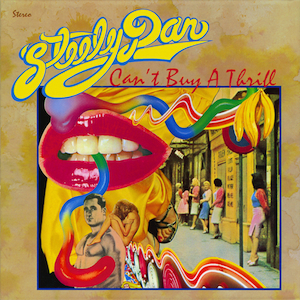
Moving on, a band named after a mechanical phallus. Steely
Dan is one of those bands that garner instant respect just by dropping their
name. Made famous through the 70s, their blend of RnB, jazz, pop, rock, and
funk is as intoxicating as the hedonistic lifestyle they constantly reference;
ca-razy cats that they are.
Steely Dan
are known for their high-brow instrumentation and intense studio sessions, and
are generally regarded as a ‘musician’s band’; something I would not know much
about frankly.
Something I do know
however is that
Can’t Buy a Thrill is
an intricate, occasionally eccentric, classic rock masterpiece. I say rock,
although this is by far the closest thing that this lot come to pop.
Do It
Again is probably the choice cut, a gorgeous, smoky track with an
electrifying sitar solo, sounding like
Son
of a Preacher Man with a razor-sharp edge.
Do It Again is one of the
greatest tracks of the early 70s, but it is a piece of class that is far from
alone.
Dirty Work comes to life when its
keyboard infused chorus comes into play, and piano hooks abound in the
indecently pretty Kings and Change of the Guard. The greatest thing about Steely Dan is that
you are never really sure if they are being genuine or just fooling you about.
Take the seminal Reelin’ In The Years,
which aside from sound tracking idiotic BT Infinity adverts, sees a lovely
instrumentation and upbeat choruses mask what is, at its core, a pointed attack
at an aloof snob; a hate song for all intents and purposes. Do it
Again is similarly the tragic tale of a powerless loser that is disguised in
the glittery dress and trendy haircut of immaculate funk instrumentation. Still
you would be wrong for thinking Donald Fagen and Walter Becker are wasting your
time by committing whatever passed as Trollin’ in 1972. You would be right in thinking that both their names
are Yiddish to the point of hilarity. But that’s beside the point.
While their more complicated, jazz-fused adult radio excursions
in later years, are what gave them their gold standard, this first effort can
still stand proud among some of their best work. It may be radio-pop but it’s the very, very
best of radio pop, and this set of tracks, aside from the leaden-footed Brooklyn (Owes The Charmer Under Me),
are masterfully produced and arranged. Narrative strands in these songs almost
seethe with lyrical ambivalence, but that just adds to the overall effect of
maturity, and to the bands characteristic anti-hero credentials. One of the very best bands of the 70s, and
one that sounds as fresh now as it did then. Well, I presume so anyway. It’s
hard to gauge context when in the early seventies I was still a good twenty years
away from conception. Regardless it’s a fantastic album and one that can
hopefully win some points back after awarding Lady Gaga a place in these
hallowed halls.
4. Goldfrapp- Felt Mountain

If you fed the spirit of Charlotte Bronté through a
harpsichord, it would probably sound a bit like Golfrapp’s
Felt Mountain.
The thing
that really strikes you is that while half of this album could be fifty years
old, the other half sounds like it was produced some fifty years in the future.
It is a bizarre, disquieting set of tracks, but an infinitely satisfying one.
Lovely Head opens proceedings with some
seriously strange synth lines, coupled with some far-off mountain top whistling
and a spy-film back beat, it sounds like a Dalek enjoying a country walk whilst
whistling an off-key rendition of
Telephone.
This pseudo-strangeness prevails throughout the set, through the obtusely named
Paper Bag and reaching a sort of peak
in
Human, which is pure
Disney-villain monologue put to sinister strings and a jaunty beat that,
between synth throbs, echoes of a Samba shuffle. Imagine Ursula dancing the
famous Merengue, scallop shells in hand.
There’s a definite raunchy edge to Felt
Mountain; sometimes it works and sometimes it doesn’t. Lines like "No time to fuck/ But you like the rush?" carry a
brilliant punch to them, but at other times it’s just a bit much. Sometimes you
think main lady Alison Goldfrapp just needs to simmer for a bit, maybe listen
to some Enya or take a cold shower. Still the pick of the lot, Utopia, hums with an undeniable buzz of
synths and a thick, robotic bass line; it’s really a fantastic track. This is
not Goldfrapp’s finest work; for me
that honour must lie with the folky loveliness of Seventh Tree.
Felt Mountain is truly a fantastic album because it finds that sweet spot between art pop and glam rock, a nishe that was blown wide open with the bombastic, if rather gangly Black Cherry. Still, Goldfrapp
are and were one of the greatest pop acts in the country, and this is an
intriguing debut; one that has more than stood the test of time. It sounds just
as weird now as it did at the turn of the century.
3. The Music- The Music

There is just something about 2002; every song that came out
that year sounds almost unbelievably dated, and even
The Music’s brilliant, hard rock debut does not quite escape that
paradigm unscathed.
But that does not
quite diminish this raw, heavy, and occasionally po-faced debut album, one that
is shamefully absent from the greater musical conscience. This is an album that
combines experimental rock, heavy guitar work, Ashworth swagger, and techno
grit. Maybe it isn’t such a surprise that it’s not a family favourite then;
it’s hardly
Wake Me Up Before You Go-Go.
The Dance starts the show with a huge wall of noise, as a deep,
sonic wail of guitar meshes into an up and down bass line straight out of Mission Impossible. The strings are met
half way by a thundering drum component and some crackly electro burbles. Since
it’s a song best suited to midnight drug marathons and angry fornication, you’d
think you might get a tea break in track two. You’d be wrong though. The
brilliantly named Take The Long Road And
Walk It, is less a song and more
noise to trash the shit out of a hotel room too; there’s shuddering, contorted
guitar riffing, techno drum beats and a bass that’s thicker than rice pudding
reinforced with hardening concrete. In
these two songs you get the definitive understanding of The Music; Led-Zep with
dance floor beats. It’s an intriguing formulation. Things get even better in
the dreamy, pass-the-pipe brilliance of Human,
where you feel the presence of The Verve’s
chicka-chicka-wow guitar sitting alongside far-of vocal harmonies, and a
trip-hop drumbeat. It’s another experiment in sonic production that proves
deeply successful.
However I stand by what I opened with. Float is best forgotten, descending from noise-rock to just, noise.
Similarly Disco, despite its raw
guitar effects, falls flat , flat on its stupid, ugly face. But these blemishes
are easily forgotten when you have the crunch of The Truth Is No Words, or the contrived sing-along in The People, which features probably the
most absurd and successful guitar contribution on the whole album. Then there
is the slow buildup of Turn Out The Light,
and the closing piece, Too High,
starting off with a simple guitar setup that soon develops into a triumphant,
now-or-never rock and roll anthem, through some soulful lyrics and bluesy
guitar plucking.
Human, Getaway, Disco, Float, it’s all
rather monosyllabic on this album and that extends to other aspects too; the
lyrics feel clipped, and there seems a certain lack of connection and
direction. But this is still a blisteringly entertaining album, with plenty of
attitude and Yorkshire twang to give the Leeds lads some real character of
their own. I really wish I could’ve been
in Leeds when this came out. The Music
were one of the best bands around, and after this foray they dabbled in
alt-rock and electonica, before calling it quits in 2011. I was at one of their
very last gigs, on their farewell tour The Last Dance; hands down one of the
greatest gigs I have ever been to. It’s tragic that they are gone, and more
tragic that so few people seem to have registered them at all. But this is one
of the very finest debuts of the noughties. An infectious marriage of jam-rock,
Trainspotting electronic
sensibilities, and vocal flair.
2. DJ Shadow- Endtroducing...

I like video games. A particularly good one is
Splinter Cell: Conviction. In it, at
approximately half way through, series protagonist Sam Fisher finds out some
fairly pivotal information. He’s not best pleased by this, and proceeds to trash
the shit out of an office whilst words like ‘trust’ and ‘death’ swarm about the
walls like Carol Vorderman’s been on some really bad acid. A rather distinctive
track can be heard in the background, which sounds sort of like
The Omen soundtrack and the sound of a
thousand church-bells falling to ground at once. Upon inquiring from whence
that song had came, I discovered the world of DJ Shadow.
I’ve come to habitually suspect anyone who has DJ in front
of their name; since in the past the only successful ‘DJ’s’ had been such
culturists as DJ Sammy and DJ Punjabi. But any fears were blown away when I
finally laid hands on a copy of Shadow’s venerated debut album, Endtroducing. It is, for want of a better term, a unique
album. It isn’t geared at being a pop smash, it isn’t about hooks and licks. It
is heavily spiritual; since the album is itself a re-mash of literally hundreds
of old, forgotten records. Nearly all of the materials came from a single record
shop. Here DJ Shadow, Josh Davis to his friends, spent night after night in the
basement, where far away from the order of the sales floor, LPs were strewn
everywhere, in huge piles, the cardboard gaining mildew and with dust covering
everything. It was in this pit of musical abandonment that DJ Shadow crafted an
album very much aware of where it’s coming from. As Shadow said himself, during
an interview for the documentary Scratch;
“...you're looking
through all these records and it's sort of like a big pile of broken
dreams...Whether you want to admit it or not, 10 years down the line you'll be
in here. So keep that in mind when you start thinking like, 'I'm invincible and
I'm the world's best,'...”
So straight away, you know what kind of a clanking,
other-worldly sort of album Endtroducing
is going to be. The distinctive heavy drum-beats are ever present, but they are
just part of a huge sound. See the aforementioned industrial clang of the
awkwardly titled Building Steam With A
Grain of Salt. There is the weird
sci-fi synth pops and lovely saxophone work on Changeling, and the melodic, deep-funk bass line, and baby-making
trumpet component on What Does Your Soul
Look Like (Part 4) .Stem is
probably the strangest thing on an album of strange songs. It starts with some
ethereal guitar from Love Suite by
Nirvana, though not that Nirvana;
apparently, there was British name of the same band. That alone tells you everything you need to
know about DJ Shadow. This moves into
some severe drum beats and a short section of a stand up routine, followed by
some mournful brass; it is the twitchy, brilliant centre piece of the album. Organ Donor, with it’s weird aura, trembles
with potential; one that is realise, on the deluxe re-release, in the extended
mix. Twisted, almost inspid keyboard
throbs twitch and convulse about the back of your skull, whilst a driving
backbeat invokes the spirit of the very grittiest that hip-hop can be; Organ Donor is fantastic. But this show
of class is not alone. While Building
Steam is probably the most arresting, most rowdy thing on the album,
probably the most interesting is Midnight
in a Perfect World. Midnight is
sort of representative of what this album is all about; it is a quiet, and
disquieting, but ultimately lovely song, one that sounds quite unlike anything
that was around in 1996, and even today, it sounds like the sound of tomorrow.
This is music for the night, and not a night spent with
friends in a night club, but a night spent in solitude; perhaps working,
perhaps just thinking. The music is so deeply, even uncomfortably personal, you
feel almost like the sound of it is surrounding you, until you stand, alone,
isolated from the world around you.
But it is not a bad sort of loneliness, it
is a time to reconnect with an emotion that music is so rare to invoke;
introversion. This is music that was conceived in the lonely dead of night, in
a dusty basement, by flickering bulb light. As a listener, the feelings of
introversion and ablution are palpable. For me it is an incredibly meaningful
album, it sound-tracked some of the strangest times of my life. But it is a set
of songs that will have a different meaning for every individual listener. There
isn’t really any praise I could give this album that would be high enough.
There are some who would probably not get it; it is certainly introverted and
some people like a bit more sparkle and pop for their money. But this is one of
the most unique, most distinguished and, strangely touching albums you could
ever hope to lose yourself in.
1. Mute Math- Mute Math
Sometimes an album comes along that sounds totally, utterly
unique.
Taking inspiration from some of
the greatest bands of the past twenty years, that is something to be admired.
But introducing just as much material that is totally fresh, that is a true
achievement, and one that American boys Mutemath achieved in some style.
Released in the States in 2006, and the UK the following year, the New Orleans
troupe crafted one of the most spirited first attempts in recent memory.
Although I suppose memory isn’t the best analogy, since I am yet to meet more
than two people who have ever heard of the album in any capacity. Still
popularity does not equal quality, as anyone at Island Records will probably
tell you. Eponymous debut
Mutemath is
a successful marriage of art and heart.
Collapse
starts the show with a gradual military drum snare, leading into some distant
vocals and floaty keyboard lines, before dropping the listener back to earth
with the driving guitar lines of Typical,
sounding like Blur with greater crunch. Frantic cymbal-clashes and a thick,
slow bassline tie into the soulful, clear voice of front man Paul Meany, who
sounds like the love-child of Bono and Sting, conceived whilst making prolonged
eye-contact with Peter Gabriel. Typical
is a real flash of class but it is one that is sustained into Chaos, a twitchy, frantic track that
sounds like a Radiohead track being
spun by DJ Shadow. Drummer Darren
King plays on a relatively small and simple drum kit, far from the sprawling
obscenities of many modern bands, and he drums with a rubber headpiece on that
looks like an upside down codpiece, that
somehow helps him keep beat. King’s
hip-hop beats are some of the most furious and unique ever put to record, which
may sound strange since drumming is rarely an area that particularly stands
out, but his style is so fresh and distinct it really is worthy of
attention. What really impresses is the
approach the band takes not just to music but to narrative technique. Take the
contrived centrepiece of the album, Noticed.
It proves a good demonstration of the band’s expertise in both areas.
Lyrically
it is a love song, a song about powerful emotion and illimitable longing,
hardly new ground for avant-garde art-pop. And yet it comes across so new and
inventive; for a start Meany avoids using the L-word even once, which may sound
strange but it gives the song a far more mature and understated tone that fits
the band perfectly. Meany grabs the meaning but ditches the jaded trappings of
dopey love pop, cracking out brilliant encapsulations of feeling with lines
like “You are reaching/ Something that is
beating/ I can’t believe I never noticed/ My heart before.” Not since the
likes of Jeff Buckley have songs about love been captured in such impressive,
personal formulations that cannot be understood on first listen; that must be
unravelled over time, to great satisfaction.
Similarly the guitar work is absolutely astounding. Taking a few leaves
out of The Edge’s guide to incredible guitar lines and writing the rest of the
book himself, guitarist Todd Gummerman (hilarious surname aside) begins with a
stuttering, atmospheric plucking that builds through an instrumental breakdown
in the final minute of the song, building up into a huge, welling sound. King’s signature math rock back-beats offset
Gummerman’s raw power, giving the song a frantic, brilliant energy. Noticed is one of the strangest and most
breathtaking tracks conceived in the last decade. But it is just one pick from
an album full of sheer inventive zest; a collection of experiments that prove
resounding, triumphant victories.
Take Picture,
a song that treads similar water to Noticed
and similarly echoes of U2 tracks like One.
Again what Mutemath really excel at is combining all their experimental
weirdness with narratives that are overly familiar; Picture sees Paul Meany sat holding a photograph of his former beau
and blubbing a bit, probably
something a lot of people can relate to.
It’s a tired setup brought to life through the quirky, highly mature
storytelling technique employed by Meany; ‘It’s
all we’re left that’s of any worth/ And it’s so much more than a thousand
words/ Now in this frame is our only way we can endure’. It’s a song that I
personally find tremendously touching, one that again enjoys a frantic hip-hop
beat to prevent it having any chance of becoming a dirge, as well as some
brilliantly devastating synthesisers towards the end of the song that sound
rather like the groans of a dying animal. In a good way. You might think the
prevalence of hip-hop would make these songs off-kilter, but somehow it really
doesn’t; I reckon it probably needs to be heard to be believed.
This is a collection of emphatically well produced, expertly
put together, and stunningly original songs. There are countless flashes of
brilliance; the lovely, soft, symphonic guitar solo in Stall Out, the jive inspired riffs in Plan B, the adult-contemporary lament of You Are Mine, or the frustration at an uncaring world, in
Break The Same. There are few records
that have impressed and entertained me to such an extent as this set of songs,
and I really cannot think of any other way of saying how great this band are.
Imagine Tom Hanks, flying towards you with the wings of an angel, proffering
forth a plate of chocolate topped cheesecake and a small fork to eat it with.
It’s actually better than that.


