I don’t really believe in New Years as some sort of annual
ritual of personal change or rebirth of character. It’s just a bloody day,
after all. Of course it didn’t help that I spent a sizeable portion of the last
night of 2012 hocking forth furious gushes of warm chunder into a toilet bowl. Such
activates rarely inspire feelings of youthful optimism, and not once did I feel
the urge to stand from my inebriated slumber and do a little jig for the joy of
the New World. But regardless of what you think of the end of the year, or more
importantly, the start of a new one, it’s hard to escape some feeling of
introversion, or reflection. Was it a good year for you? Did you do everything
you could have done and that you wanted to do? Questions like this seem almost inescapable.
Here are a few songs that might provide some prompts for answering them.
5. Frank Sinatra- It Was A Very Good Year
 This is a fairly obvious choice.
Then again subtlety isn’t my strongest point. If I ever made a compilation of
shite music I’d probably start it with something by Kings of Leon; predictable!
It
Was A Very Good Year is one of the great American torch songs, alongside
the likes of Glenn Campbell’s By The Time
I Get To Phoenix. Sinatra’s version is by far the best-known and best
loved, and for good reason. Good Year
is a sumptuous retrospect, miles away from Bono’s world weary vision; Sinatra’s
song is almost gleeful in its gentle retrospection. It’s a love song, and a
bloody good one at that, without even a hint of the pulpy mush that usually
goes hand in hand with work of the sort. It’s almost a cliché listening to this
song on New Years day since it specifically references the whole bloody
occasion. But it really is Sinatra at
his best, and he reels off this narrative with a sort of assured tenderness
that only he was ever able to convey. Good
Year sees Sinatra looking back at a life of love affairs. Oh, Sinatra.

I question that.
The orchestration on the track, arranged by
veteran Gordon Jenkins, is some of the loveliest ever committed to record, and
the song’s final verse is one of the most memorable of any song of the last
fifty years, as Sinatra reflects on his Fiftieth birthday; “But now the days grow short/ I’m in the
autumn of the year”. A song needs something special to be relevant after
all these years and the central message of Good
Year is this; make the most of your life, so in your old age you’ll have
plenty to look back on. It’s a bit like
what Steinbeck said; the more clods of
dirt you dig up, the more nuggets of gold you’ll have when you sift through it
all in old age. Although I think he put it better than that. Actually did he
actually say that? I think so. This has been a review.
4. U2/ Brian Eno/ Luciano Pavarotti: Miss Sarajevo
 The beginning of a year will
always stir in you something a bit like introversion, even if it is for a few
minutes in between deep drags of Babycham on New Year’s Eve. But this song is a
good example of how to have a Top 10 hit that has actual merit and meaning; a
tact that this generation’s pop stars seem to have forgotten. It is one of my very favourite songs by the very
great U2, and I put that down to several reasons. But the central appeal of the
song is it’s dislocation from almost every other song ever written; it sounds like
it was written in some sort of vacuum, conceptually speaking. Why do we spend
vast swathes of our short lives completing menial and shallow tasks of which we
prescribe little if any moral worth? Why is human life geared towards the meagre
and small, and not the epic or meaningful? “Is
there a time...” asks Bono “...for keeping your head down/ For getting
on with the day?” . The question Bono poses is so simple and yet it is one
so often overlooked; is it right to live a normal life, to work 9-5, settle
down, have kids, and retire. Is that all there is? You don’t really get the
likes of Olly Murs pluming the kind of philosophical depths that this song delves
into.

Also, best make sure you don't draw the blinds,
next time you prep for a photoshoot.
Ultimately it is hard to tell if
Bono ever gives us an answer. By some tests it is actuallya rather dull song, it's certainly
very slow with a sort of mechanical monotony to it, and a very gentle chorus,
but it all fits together in the most elegant manner, and the inclusion of an impassioned
solo by the late and great Luciano Pavarotti is nothing short of beautfiul. The song is actually about a
beauty pageant in a war-torn Sarajevo, during the Bosnian war; hence Miss Sarajevo. The contrast is with the priorities of a besieged
minority with the care-free lives of the citizens of modern Europe. It isn’t really a protest song per-se, but it
certainly has a quarrel with the western way of life, a quarrel as poignant now
as it was then. The world we live in now is so devoid of spirituality or any
higher-power to aspire to. The erosion of faith in the Western world means that
now the apparent futility of everyday life is laid bare before us. The culture
we are all a part of is content to distract itself; with everyday trivialities,
consumerism, trash-TV. The result is mass-despondency and boredom. What is the
solution? Bono doesn’t really tell us.
But maybe that’s the point. Maybe it isn’t
for aging rock stars to consider, maybe it’s a solution that must be provided
by the new generation. The New Year is
supposed to be a time for fresh starts, and Miss
Sarajevo tells us that above all, remember your priorities, remember that
your comforts aren’t all you need, that there is always a higher purpose, one
that is different for every person. Don’t get stuck in the 9-5 for ever. Hold
onto dreams and aspirations. And
remember, there ain’t no solo like a Luciano Pavarotti solo.
3. Yeasayer: Ambling Alp
 It may be that Bono’s world-weary
war-yarn isn’t your idea of how a new year should start. Look no further than
the giddy excess of Brooklyn based four-piece Yeasayer, and their finest work, Ambling Alp. Arriving in an ethereal fog
of heavenly synths and the cawing of distant birds, the track suddenly explodes
in a cascade of off-kilter tribal drum beats, kooky backing vocals and floating
keyboard lines. It is definitely one of the weirdest songs I own and also one
of the most intensely optimistic. “Now kid I know I haven’t been a perfect man”
sings front-man Chris Keating, as he opens a narrative full of hope, tenacity,
and unfettered jubilation. Generally you
feel like Keating isn’t so much conversing with you the listener, as with a
younger version of himself, and the song drips with longing and fond
retrospection.
It’s not a song about
hardship as much as it is overcoming hardship, and the main chorus which soars
throughout the song is truly gorgeous; “Stick
up for yourself son/ Never mind what anybody else done”. The secret to the
song is that it doesn’t descend to the kind of ‘time heals all wounds’ schtick
that gets rolled out in every half-baked power ballad that the X-Factor
squeezes out of its rear aperture every November. Keating warns us that there
will come a time when we will all face some personal devastation and that it
may cause considerable personal pain and anguish. But the solution is not the
Alexandra Burke/ Leona Lewis solution to overcoming heartbreak (‘wait for a bit
and then when your old you’ll be like ‘meh’’ ). The answer, according to the
eccentric narrator of Ambling Alp, is
to take that pain and anger, and, far from forgetting it, learn from it, and
keep it close to heart;
“Now the world can be an unfair place at times
But your lows will have their compliment of highs
And if anyone should cheat you
Take advantage of or beat you raise your head
And wear your wounds with pride”
The solution is not to forget,
the solution is to forgive. Am I reading too much into a rather mad and ditty
pop song? Possibly. But as far as I can tell, there a few lessons more worthy
of consideration than those enclosed in the jubilant rhetoric of Ambling Alp. And yes, the music video is weird as fuck, and don't say I didn't warn you.
2. Death Cab For Cutie: The New Year
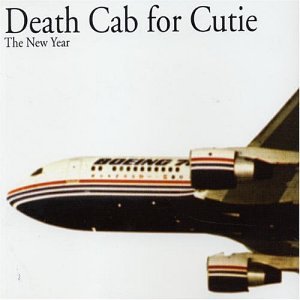 Transatlanticism is the
album that certified Death Cab for Cutie as one of the brightest acts on
America’s indie circuit; like a mild-mannered, self-depreciative re-telling of The Smiths without all the pretence. Album
opener, The New Year trembles, quite
literally, with totemic importance, as a thudding bass and guitar hook-up is
matched with the clanging of distant bell-towers, over a narrative that
establishes Ben Gibbard as one of the truest song-writers in popular American
music. The lyrics are notably sparse,
but as a result they clang with added weight and have a real, bitter edge to
them. “So this is the new year” sings
Gibbard, “And I don’t feel any different”;
a sentiment most of us are probably feeling, rising in a bedraggled stupor after
the rowdy excess of New Years Eve.
Musically this is one of the bands most distinct; with evasive, light
drum beats, and an air of New Wave simplicity, a lá Talking Heads; a theme pursued in Gibbard’s other project The Postal Service.
It’s such an easy choice for the beginning of
the year because it really captures the essence of the collective sigh that the
majority of the Western world lets out, as the pomp and occasion of New Years
Eve gives way to headaches and a return to the humdrum of everyday life. But it
is not a pessimistic song, even if it does clang with a rather dystopic edge.
What Gibbard wants us to really understand is that you can’t rely on occasion
to give you good luck or direction in life; you must make your own happiness.
And this I think is very true. If you want a fresh start then bloody well make
one, whether it be on the first of January, or the first of March, or August.
The time doesn’t matter; the willingness to change is what matters. And while you’re
making that change maybe give Death Cab’s back catalogue a whirl; it’s all very
good indeed.
1. Billy Joel: Two Thousand Year
 Despite having a certain fondness
for prog rock, I also have a fairly incredulous love for the music of Billy
Joel. Though often derided as bubblegum
pop of the cheesiest order, it is often overlooked that Joel was a real down
and outer who battled manic depression and worked harder than anyone to achieve
mainstream success. This was an album track off of Billy Joel’s last studio album,
The River of Dreams, and performed at
his Millennium concert in New York, in the final moments of New Years Eve 1999.
The live recording from that concert is worth a look for the sheer emotion and
occasion you get from it. But the studio version is in my opinion one of his
very best and most overlooked. It is
rather unique in that it is a song about far more wide-spanning and prophetic
material than what Joel is best known for; and sounds more like a modern day
hymn in places, with a strong chorus and themes of hope and the human
future.
Although it is more of an anti-hymn in reality, since the song operates as a very general timeline of human history, with Joel reaching the end of the timeline (and the start of the new millennium) with the lyric “Prophets and angels/ Gave us the power to see/ What an amazing future there will be.” Two Thousand Years is shot through with hope and anticipation; again rare for a Billy Joel recording, which often feature a far more understated optimism. Joel’s voice is particularly lovely on this track, indeed the whole album, with all the humanity of Springsteen mixed with the soft-rock sentimentalities of Neil Young. The millennia-spanning narrative and rich production is backed up by a sumptuous arrangement. As per Billy Joel tradition the piano serves as the base-line of the song, but this is matched with some folky guitar plucking, triumphant accordion and harmonica, and subtle, dramatic drum contributions. These all tie together beautifully in the gorgeous instrumental choruses. The final verse of the song is one of my very favourite lyrics in every song, and is particularly important in the context of the beginning of the year;
“And in the evening
After the fire and the light
One thing is certain: Nothing can hold back the night
Time is relentless
And as the past disappears
We're on the verge of all things new
We are two thousand years”.
After the fire and the light
One thing is certain: Nothing can hold back the night
Time is relentless
And as the past disappears
We're on the verge of all things new
We are two thousand years”.
A lovely song with a lovely sentiment, I think we all can agree. As a side note, you should see his daughter. She looks so
alike him; it’s like someone crudely cropped his face onto a girl’s
body like those ‘face in a hole’ websites.

Hey, you're welcome.
I maintain that New Years Eve is not necessarily a fresh
start; the New Year is whatever you make of it, not something that the
mysticism of a new year can just set out for you. It’s best to think long and hard about what
you want, and more importantly how you can achieve that. New year’s resolutions
are a load of old wank, and are probably best avoided. But that doesn’t mean
that you can’t make a start for the better. Just know that before you change
anything, make sure it is for your benefit and not anyone else’s, unless you
have some sort of acute form of tourettes that means you incessantly spout
forth the different ways you can baste a brisket. Then maybe a New Year’s
resolution is in order for the sake of other people.

No comments:
Post a Comment